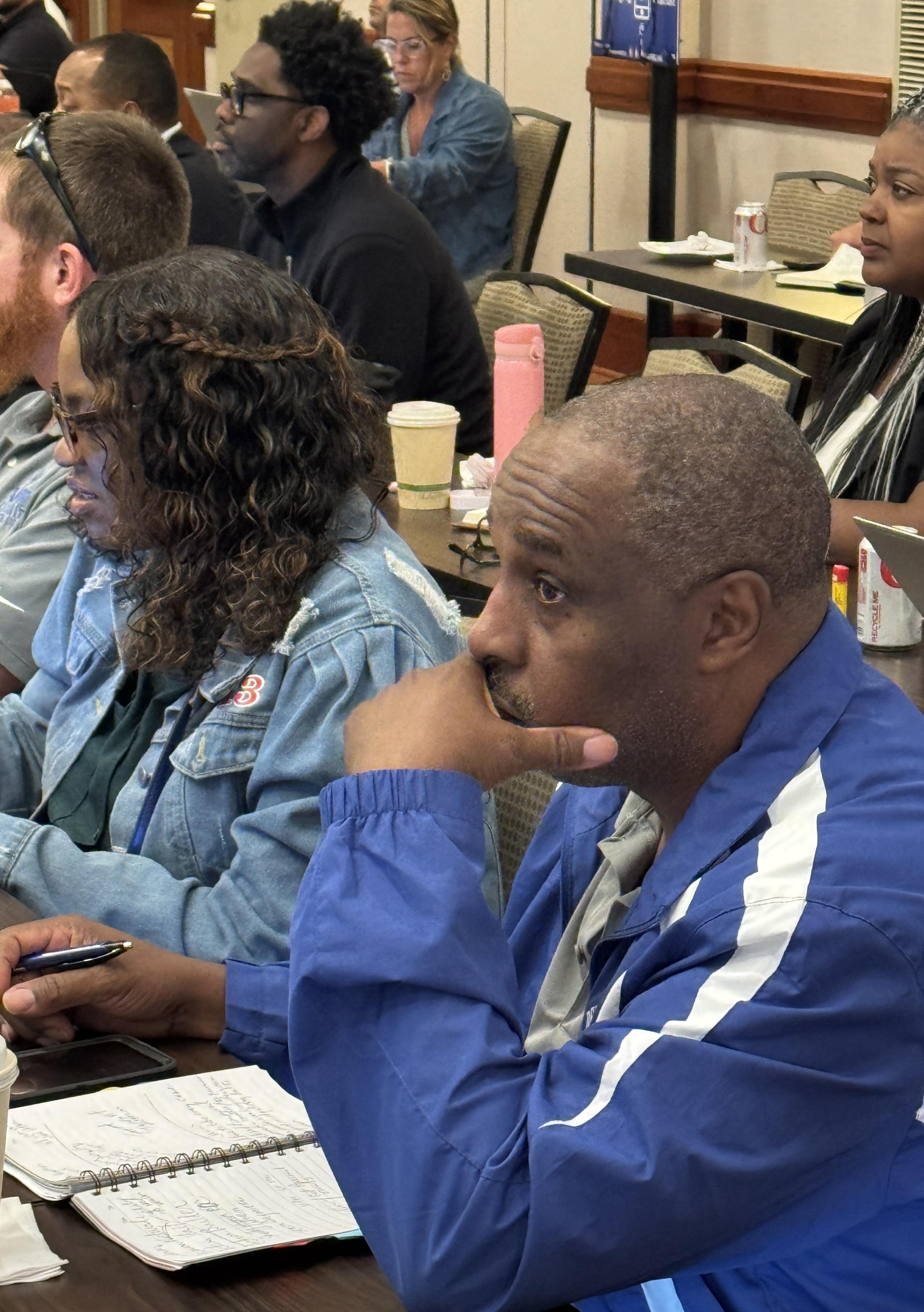
Local union leaders from across the country gathered in Howard County, Maryland, home to AFSA Local 36, the Howard County Associations of Supervisors and Administrators, for AFSA’s Summer Learning Institute, a multiday conference focused on strengthening local unions, developing effective leaders, and giving school leaders practical tools to succeed at the bargaining table and beyond.
The institute brought together local presidents, executive board members, and emerging leaders for hands on training in collective bargaining, communications, member engagement, labor law, artificial intelligence, governance, and strategic planning. The goal was to give local leaders tools they could take home and put to work immediately to strengthen their unions, increase member participation, improve bargaining outcomes, and build stronger organizations.
But while the formal sessions provided valuable instruction, one of the conference’s greatest strengths was the opportunity for leaders to learn from one another. AFSA President Mark Cannizzaro said the conversations that happened between sessions proved just as valuable as the presentations themselves
“The classes provided outstanding training, but the real work of this conference happens when leaders sit down together, talk about the challenges they’re facing back home, and realize they aren’t alone,” Cannizzaro said. “Every local has unique circumstances, but many of the issues are shared. When leaders exchange ideas, discuss solutions that have worked, and build relationships with one another, they return home stronger and better prepared to serve their members.”
That spirit of collaboration was evident throughout the program as leaders compared experiences, shared successful strategies, and discussed approaches they could adapt to their own locals.
Collective bargaining was a central focus, with nationally recognized labor attorney David Borer leading an in-depth session on advanced bargaining strategies.
Participants examined how to identify bargaining leverage, evaluate and accurately cost proposals, negotiate health benefits, maintain member solidarity, and avoid common mistakes that can weaken a union’s position. The message was clear, preparation, organization, accurate information, effective strategy, and member unity are critical to achieving strong contract outcomes.
Leadership development and member engagement were also major themes. During “The Union Leader’s Jambalaya,” longtime labor organizer and AFSA Communication Director Scott Treibitz combined lessons from labor history, strategic planning, leadership development, and member engagement to help local leaders strengthen their organizations and prepare the next generation of union leadership.
Participants also explored strengthen executive boards, improve governance, recruit members, and create succession plans that prepare locals for future leadership transitions.
The emphasis was not simply on leading a local today, but on ensuring that the organization remains strong tomorrow.
Communications training focused on helping leaders build trust with members, school communities, and the public. Craig DiFolco, communications director for AFSA Local 1, the Council of School Supervisors and Administrators , led sessions on modern communications strategies and the changing media environment.
Participants explored ways to improve internal communications, increase engagement, and use storytelling to communicate their locals’ work effectively. DiFolco also addressed communications during collective bargaining, emphasizing the importance of preparing the public narrative before negotiations, keeping members informed throughout the process, and communicating successful agreements without compromising bargaining strategy.
Artificial intelligence was another recurring topic. DiFolco discussed practical ways local leaders can use AI to improve communications, save time, and increase engagement while maintaining the human connection essential to union leadership.
AI Education Expert and Principal of Staten Island Technical High School (SITHS) Mark Erlenwein introduced the TRACE Framework, a human centered approach to responsible AI use. The session focused on helping educators and school leaders navigate AI while protecting critical thinking, student ownership of learning, and academic integrity.
For AFSA leaders, the discussion provided practical information they can bring back to their schools and communities as AI continues to reshape education and the workplace.
The institute also featured training and discussions on labor law, digital organizing tools, the AFSA contract library, retiree chapter development, collaboration with teachers’ unions, and executive board governance.