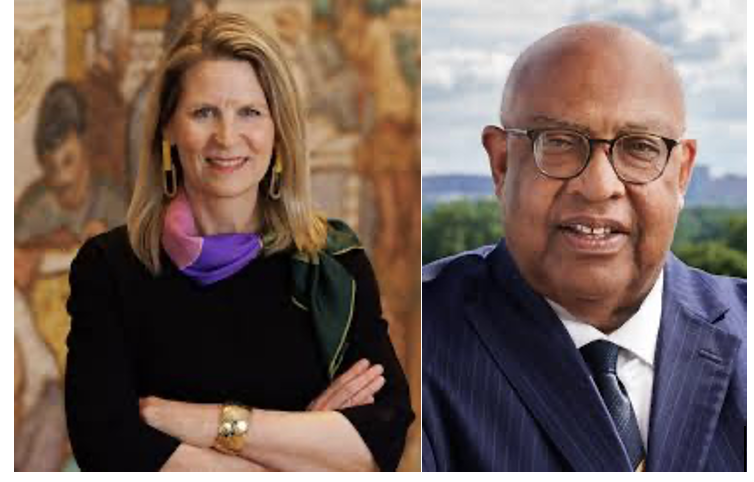
Delegates to the AFL-CIO's 30th Constitutional Convention voted to reelect Liz Shuler as president and Fred Redmond as secretary-treasurer, extending the leadership team's tenure at the helm of the nation's largest labor federation.
The reelection gives Shuler and Redmond another four years to lead an organization representing approximately 15 million working people through 65 affiliated unions. The vote came as labor leaders from across the country gathered in Minneapolis to set the federation's agenda amid ongoing battles over workers' rights, organizing, artificial intelligence, and economic inequality.
Shuler and Redmond first made history when they were elected to full terms in 2022. Shuler became the first woman elected president of the AFL-CIO, while Redmond became the highest-ranking Black labor leader in the federation's history.
Their first term was marked by significant growth for organized labor. The AFL-CIO expanded from 57 to 65 affiliated unions, including the return of the 2-million-member Service Employees International Union (SEIU), and helped grow the federation's collective membership to roughly 15 million workers.
"Serving as president of the AFL-CIO has been the honor of a lifetime, and I am deeply moved to be reelected for a second term," Shuler told delegates following the vote.
Shuler reflected on her own family's union roots, recalling how an apprenticeship through the International Brotherhood of Electrical Workers transformed her family's economic future and inspired her lifelong commitment to the labor movement.
Redmond likewise pointed to the role unions played in changing the trajectory of his family. He told delegates that his father's union job at an aluminum mill helped lift the family from poverty and ultimately opened opportunities that led him to become one of labor's most prominent leaders.
"When I joined my dad at the mill, I also joined a movement and a legacy of trade unionists who sacrificed and fought to make our jobs safer, our workplaces more equitable and our society more just," Redmond said.
The AFL-CIO leadership team enters its second term facing what it describes as an increasingly challenging environment for workers. Shuler and Redmond pledged to continue organizing new workers, mobilizing union members politically, protecting voting rights, and confronting corporate power.
A major focus will remain the federation's Workers First AI Agenda, an effort to ensure workers have a voice in how artificial intelligence is developed and implemented in workplaces across the country. During their first term, the AFL-CIO established the AFL-CIO Technology Institute and a State Federation AI Task Force to help shape labor's response to rapidly changing technology.
The federation also expanded its reach into new sectors, including professional sports, through the creation of the AFL-CIO Sports Council, which now includes 10 players' associations representing athlete-workers.
Shuler and Redmond pointed to labor's response to attacks on workers' rights, support for immigrant workers, and organizing efforts among federal employees as key accomplishments of their first term. They also highlighted what they described as a generational shift within organized labor, with women, younger workers, and Black and Brown workers increasingly leading organizing campaigns and assuming leadership positions throughout the movement.
Looking ahead, both leaders emphasized the importance of building worker power and expanding union membership as labor seeks to maintain momentum from a period that has seen renewed public support for unions and increased organizing activity across industries.
"We will bring people together across party lines and we will check corporate power. We will defend our democracy and we will give working people hope for a better life," Shuler said. "Everything that we won as working people in this country we won because we fought for it. We're ready to continue that fight."
The reelection vote sets the stage for the AFL-CIO's next chapter as labor leaders gather this week to discuss organizing, political action, technological change, and the future of the American labor movement.