Eight districts show how to move from abstract commitments to tangible systems
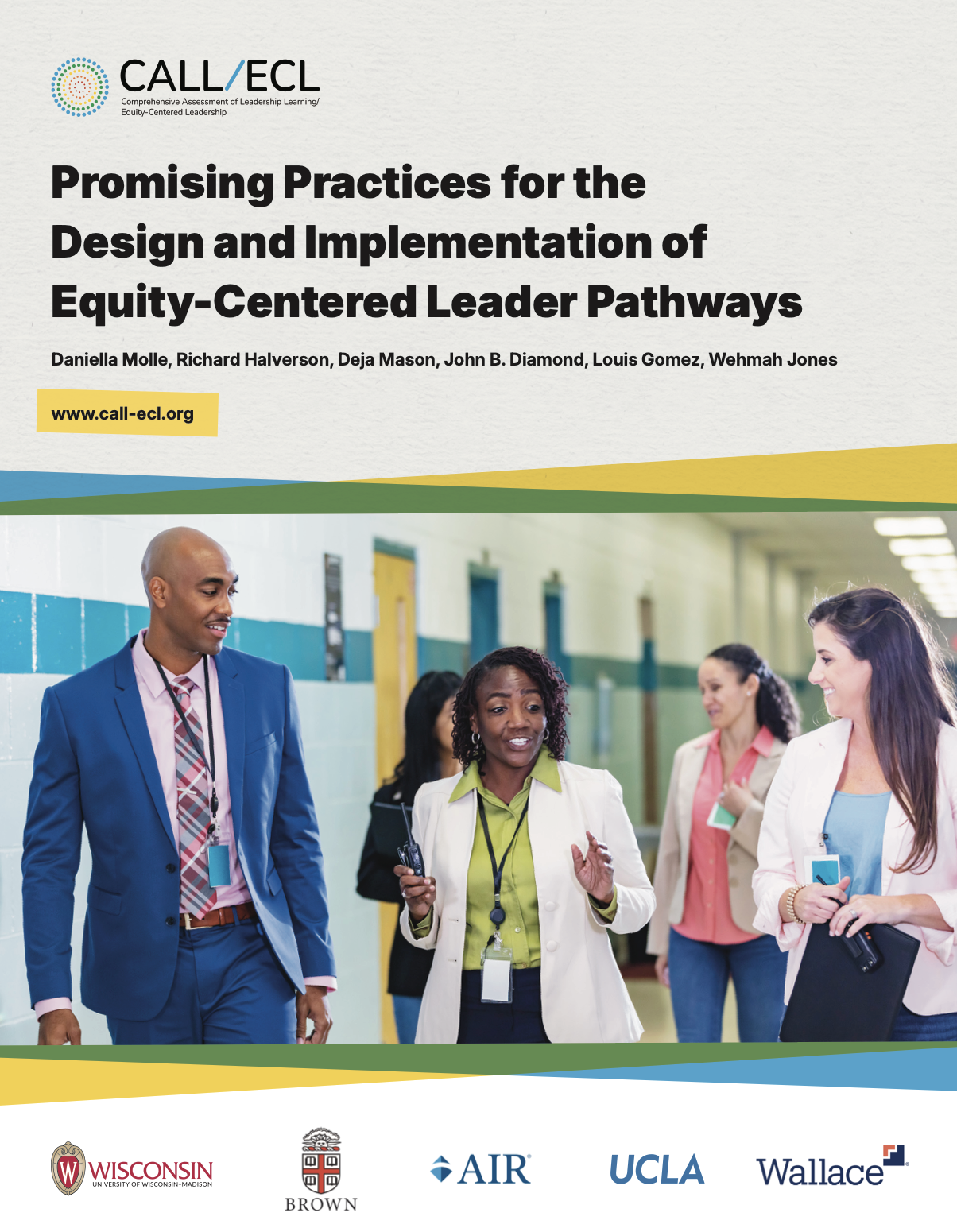
A recent report from The Wallace Foundation highlights how eight large urban school districts are redesigning their leadership pipelines to prepare and sustain equity-centered school principals.
The report, Promising Practices for the Design and Implementation of Equity-Centered Leader Pathways: Moving From Abstract Commitments to Tangible Systems, documents the early years of the Foundation’s six-year Equity-Centered Pipeline Initiative (ECPI), launched in 2021. Researchers examined how districts translated equity commitments into concrete systems, structures, and daily practices .
Participating districts include:
Baltimore City Public Schools
Columbus City Schools
District of Columbia Public Schools
Fresno Unified School District
Jefferson County Public Schools
Portland Public Schools
San Antonio Independent School District
Winston-Salem/Forsyth County Schools
Researchers documented districts’ early goals, actions, and decisions through interviews, focus groups, observations, and document review . The study focused not only on program design, but on how systems were aligned—or redesigned—to support equity-centered leadership at scale.
The report builds on earlier Wallace-supported research showing that well-designed principal pipelines can be an affordable and effective strategy for improving schools . Strong school leaders are associated with improved student achievement, attendance, instructional quality, and school climate.
Across districts, three major themes emerged:
1. Treating challenges as “opportunities for design.”
Rather than viewing obstacles as barriers, district leaders used reflection and feedback to redesign structures and routines to better advance equity-centered leadership .
2. Creating coherence across systems.
Promising practices gained traction when districts aligned departments, roles, and external partners around a shared vision for equity-centered leadership. Coherence was both a persistent challenge and a central accomplishment .
3. Prioritizing relationships and human capital.
District-led academies, affinity groups, leadership shadowing, and supervisor development were designed to build distributed leadership and local ownership of equity efforts .
Baltimore City Public Schools developed a one-year, home-grown principal residency program tailored to the district’s context. The program emerged from a comprehensive landscape analysis and feedback from district leaders and includes:
Job-embedded leadership development
Monthly professional learning seminars
On-demand coaching
Context-specific preparation aligned to Baltimore schools
The residency reflects the report’s central finding: meaningful equity work requires building durable systems, not isolated programs.
Across districts, researchers identified six promising practices emerging from the multiyear effort :
Developing internal principal residency programs
Expanding district–university collaboration beyond traditional preparation
Engaging community members in principal selection
Establishing and sustaining affinity groups for aspiring school leaders
Focusing principal supervisors explicitly on equity
Revising district policies to prioritize equity-centered leadership and long-term sustainability
For example, Columbus City Schools developed a Portrait of an Equity-Centered Leader to guide preparation and ongoing professional learning, in partnership with The Ohio State University. Meanwhile, Fresno Unified School Districtestablished leadership affinity groups to recruit, mentor, and retain principals and assistant principals of color.
The report emphasizes that sustaining equity-centered leadership requires more than policy alignment. It requires shifts in culture—particularly in the everyday interactions between educators, students, and families .
As the report concludes, progress toward systemic preparation and support of equity-centered leaders “is not only possible—it is already under way.” The districts featured demonstrate how to move from abstract equity commitments to tangible systems that expand opportunity for all students .
For the full report, visit: https://bit.ly/4qcFpaR